
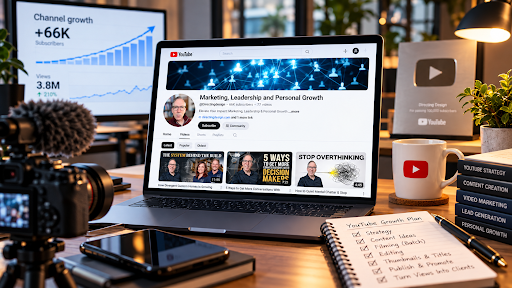
Our own YouTube channel once had 20 subscribers. Just over a year later it had passed 62,000, and we got it there while running the agency, not instead of running it. You can open the Directing Design channel and check the number yourself.
People ask what we did, usually expecting a trick. There was no trick. There was a system with five parts, run every week whether the last video did well or not, and it is the same system we now run for companies, associations and nonprofits. Here is exactly how it works.
The Honest Starting Point
The first three months were the slowest part of the whole climb, and progress was hard to see from one week to the next. This is the stretch where most business channels quietly stop, because it feels like nothing is working.
What was actually happening is that YouTube was still learning who our videos were for. Every upload gave it more information about which viewers clicked, how long they stayed and whether they came back. Channels that quit in month two never give it enough to go on, which is why the first rule is to keep the plan running long enough to learn what works.
Part One: Decide Who the Channel Is For
Before anything was filmed, the channel needed a clear promise. Ours speaks to business owners and leaders who want sharper marketing, stronger leadership and more profitable growth, and every video has to earn its place against that promise. A video that does not serve that viewer does not get made, no matter how interesting it seems to us.
This is where most business channels go wrong first. They film whatever is happening at the company that week, which makes sense internally and means nothing to a stranger scrolling YouTube. A strategy answers three questions up front: who the channel is for, what it promises them and what to film next. Once those answers are written down, content decisions stop being a weekly debate.
Part Two: Batch Filming So One Afternoon Becomes a Month
Consistency is the part everyone agrees with and almost nobody manages, because filming competes with everything else on a leader’s calendar. The fix was to stop filming one video at a time. Several topics are planned in advance, recorded in a single session and edited over the following weeks, so one afternoon on camera becomes a month of content.
Batching also improves the videos themselves. The person on camera warms up after the first recording and delivers the next ones with more energy, and the editing team works from a steady queue instead of a last-minute scramble. When a busy week hits, the channel keeps publishing because the videos already exist.
Part Three: Packaging Comes Before the Camera
A video nobody clicks might as well not exist. That is why titles and thumbnails are decided before filming, not after, and why each video is shaped to deliver on its title in the opening moments. The title makes a promise, the thumbnail makes it visual, and the first thirty seconds prove the viewer made the right choice.
YouTube SEO sits alongside the packaging. Descriptions, chapters and playlists are written so that people searching for an answer can find it, and so that one good video leads naturally to the next. None of this is glamorous, but it decides whether the hours spent filming are ever seen.
Part Four: A Steady Rhythm, Shorts and a Push Behind the Winners
YouTube recommends videos based on how real viewers respond. Its own explanation of how recommendations work points to viewing behavior, likes, dislikes, subscriptions and satisfaction surveys, along with the reputation and quality of the channel. A steady publishing rhythm feeds that system a regular stream of evidence about who enjoys the content, and it teaches viewers when to expect the next video.
Every long video is also cut into Shorts and clips for LinkedIn and other platforms, which puts the same idea in front of people who would never find the full version. When one video clearly outperforms the rest, it gets extra promotion. Doubling down on a proven video is far more efficient than hoping the next one lands.
Part Five: Turning Views Into Appointments
Subscribers were never the goal. For a business, a channel only matters if the right viewers become conversations, so every video points somewhere useful: a clear next step in the video, a landing page built for that audience and follow-up that happens automatically.
This is the layer most video services skip, and it is why so many channels produce views and nothing else. Connecting the channel to CRM and automation means a viewer who raises a hand gets a fast, personal response. The monthly review then looks at growth and booked conversations together, rather than a report full of impressions.
What the System Leaves Out
Shortcuts are not part of it. Anyone promising viral growth in thirty days is selling bots, and bots do not watch, comment or book appointments. Fake numbers also give YouTube a false picture of who your audience is, which makes real growth harder afterward.
The system leaves out guesswork as well. Every month starts with the numbers from YouTube Studio: which videos held attention, where viewers came from and which ones led to conversations. The next batch of topics is chosen from that evidence, not from a hunch.
Does It Work Beyond Our Own Channel?
A fair question is whether this only works for a marketing agency talking about marketing. The clearest answer is a client channel in one of the platform’s most restricted categories, which grew from 50 subscribers to 3,100 using the same system. The subject was different, the audience was different and the rules were stricter, but the five parts did not change.
The system travels because it is built on how viewers and YouTube behave, not on what we happen to talk about. If you want it running on your channel, our YouTube channel management services cover strategy, filming, editing, packaging, publishing, promotion and lead connection. You can also start a conversation and ask for a free YouTube Growth Plan before deciding anything.
Frequently Asked Questions
How long did it take to grow the channel to 62,000 subscribers?
Just over a year from 20 subscribers, and the first three months were the slowest. Growth on YouTube tends to build on itself once the right viewers find you, so the early months feel flat even when the work is right. Judging a channel after six weeks means judging it before the system has had a chance to work.
How much of the owner’s time does the system need?
Plan on one filming afternoon a month plus a short review of the results. Batch filming is what makes that possible, because several videos are recorded in one session. Everything after the camera stops, from editing to publishing, is handled for you.
Do I have to be on camera?
Someone from your organization should be, because a real face and voice build the trust that turns viewers into clients. It does not have to be the owner every time, and it gets easier quickly with a little coaching. What matters most is that the person knows the subject and speaks to the viewer plainly.
Will this work if our industry is heavily restricted?
It can. The client channel mentioned above sits in one of the platform’s most restricted categories and grew from 50 to 3,100 subscribers. Restrictions change how you promote and what you can say, so the strategy has to account for them from the start.
How do engagements usually start?
Most clients begin with a one-time YouTube Growth Strategy covering positioning, content pillars, packaging direction and a 90-day roadmap. From there, monthly channel management runs the full system for you. You can also request a free YouTube Growth Plan first and decide afterward.